
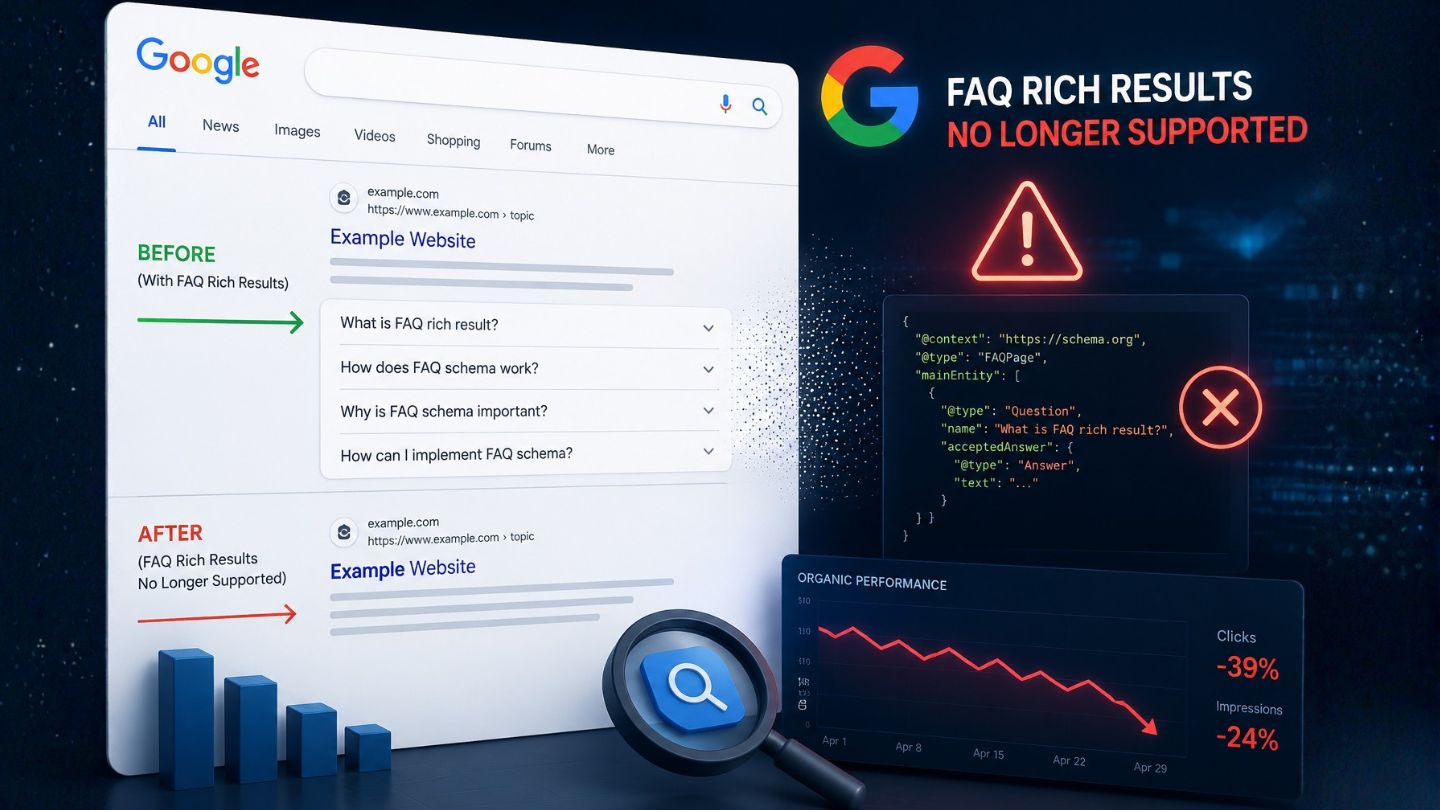
Search visibility has always played a major role in how dental clinics attract new patients online. Over the years, businesses have relied on structured content strategies, optimized metadata, and advanced search features to improve performance in Google Search. One of the most widely used search enhancements was the FAQ rich result, which enabled websites to display expandable question-and-answer pairs directly in search results. However, Google has officially reduced support for FAQ rich results across most websites, creating significant changes for digital marketing strategies in the dental industry.
This update is part of broader dental SEO updates that are shaping how businesses appear online and how websites are evaluated for quality, trust, and user experience. Dental practices that previously depended on the FAQ schema to increase visibility now need to rethink their content structure and search optimization strategy. For dental clinics that want to continue growing online, adapting to these updates is essential. Professional SEO support is now more valuable than ever, as search engine requirements continue to evolve rapidly, and maintaining visibility requires ongoing expertise.
Why Google Reduced FAQ Rich Results
Google introduced FAQ rich results to improve the search experience by offering quick answers directly in search results. Websites using the FAQ schema could display multiple questions beneath their page title, creating larger, more engaging search results.
Over time, however, Google found that many websites were overusing FAQ schema markup. Instead of providing meaningful content, some pages added unnecessary questions solely to dominate search visibility. As a result, Google decided to significantly limit the appearance of FAQ rich results in regular search results.
Today, Google’s FAQ rich results are primarily shown for authoritative government and health-related websites. For most commercial websites, including dental clinics, these results are now displayed far less frequently. This does not mean that FAQ content is no longer valuable. Instead, it means businesses must focus more heavily on quality content, relevance, and overall website authority. This shift reflects Google’s ongoing goal of delivering cleaner and more useful search results for users.
What Is FAQ Schema and Why Was It Important?
The FAQ schema is a structured data type that helps search engines understand question-and-answer content on a webpage. By adding FAQ schema markup to a page, businesses could increase the chances of earning an FAQ rich result in Google Search.
These enhanced search listings often improved click-through rates because users could immediately see useful information before visiting the website. For dental clinics, this was especially effective for addressing patient concerns about treatments, appointment procedures, insurance questions, cosmetic dentistry services, and emergency dental care.
The FAQ schema best practices originally focused on creating concise, accurate, and relevant questions that matched user intent. When implemented correctly, the FAQ schema helped improve content clarity while strengthening search visibility. Although rich result visibility has changed, the FAQ schema still plays a valuable role in helping search engines properly interpret content. Structured content remains beneficial for overall SEO performance, even if the visual FAQ-rich result no longer appears consistently.
How This Impacts Dental Websites
The reduction in visibility of FAQ-rich results has important implications for dental websites. Many clinics previously relied on these enhanced listings to stand out in crowded search results. Without the expanded FAQ display, websites must now compete more heavily through strong content quality, page authority, technical optimization, and user experience.
This update highlights the importance of comprehensive SEO strategies rather than depending on a single search feature. Dental websites now need to focus more on high-quality educational content that demonstrates expertise and trustworthiness.
Modern dental SEO updates emphasize factors such as content relevance, local optimization, mobile performance, page speed, and patient-focused information. Google Search increasingly prioritizes websites that provide valuable experiences and trustworthy guidance.
For dental clinics, this creates an opportunity to strengthen their overall digital presence through professionally managed SEO campaigns tailored to healthcare services.
Read More: Tips to Improve Load Speed on Dental Websites
Why FAQ Content Still Matters
Even though Google’s FAQ rich results are less common now, FAQ sections continue to provide strong value for users and search engines alike. Patients often search for answers before booking appointments, especially when researching dental procedures, cosmetic treatments, or oral health concerns.
A professionally written FAQ section improves the user experience by clearly and efficiently addressing common patient questions. It also helps search engines understand the context and depth of a webpage.
FAQ schema best practices are still relevant because structured information improves website organization and content clarity. While the visible rich result may not appear as often, a properly implemented FAQ schema can still support indexing and search understanding.
Well-developed FAQ content also contributes to topical authority. Dental websites that consistently publish informative, patient-focused content are more likely to build long-term trust with search engines.
The Growing Importance of High-Quality SEO Content
As search algorithms become more advanced, content quality has become one of the strongest ranking factors in Google Search. Dental clinics can no longer rely on shortcuts or isolated SEO tactics to achieve visibility. Professional SEO strategies now focus on building authoritative, trustworthy, and informative websites that genuinely help users. This includes creating educational service pages, providing detailed treatment explanations, optimizing content for local search, and implementing ongoing technical SEO improvements.
Dental SEO updates increasingly prioritize expertise and accuracy, especially for healthcare-related businesses. Search engines carefully evaluate whether websites provide reliable information that benefits users.
This is why professionally developed content is essential for modern dental marketing. Experienced SEO specialists understand how to create optimized content that aligns with evolving search standards while maintaining a strong patient-focused approach.
Read More: Importance of Writing High-Quality Content for Dental Websites
Adapting to the Future of Google Search
Google Search continues to evolve toward delivering more refined and intelligent search experiences. As artificial intelligence and advanced ranking systems become more integrated into search results, businesses must adapt their digital strategies accordingly.
The decline in FAQ-rich result visibility demonstrates that search features can change quickly. Instead of focusing solely on individual ranking tactics, dental practices should invest in long-term SEO strategies that build sustainable authority and visibility.
This includes optimizing website structure, improving page speed, enhancing local SEO, maintaining accurate service information, and publishing consistent high-quality content. Professional SEO services ensure that dental clinics remain competitive despite ongoing algorithm changes. The future of search visibility depends on adaptability, expertise, and strategic optimization.
Why Professional SEO Support Matters More Than Ever
Managing modern SEO requires ongoing attention, technical expertise, and a deep understanding of algorithm changes. Dental practices that attempt to handle complex SEO strategies without professional guidance often struggle to keep pace with evolving search requirements.
Professional SEO specialists understand how to implement effective content strategies, optimize structured data, monitor algorithm updates, and maintain compliance with current search standards. FAQ schema best practices continue to evolve alongside broader SEO requirements, making professional oversight increasingly valuable. Expert SEO management ensures that dental websites remain optimized for both current and future search trends. For dental clinics looking to increase online visibility, attract qualified patients, and maintain strong search performance, professional SEO support offers significant long-term value.
Final Thoughts
The reduction of Google FAQ rich results represents a major shift in how dental websites approach search visibility and content optimization. While the FAQ rich result may no longer appear as frequently in Google Search, professionally structured content, strategic implementation of FAQ schema, and high-quality SEO practices continue to play a vital role in improving online presence and attracting new patients. Dental practices that adapt to these evolving search standards with strong, informative content and ongoing optimization efforts will remain better positioned for long-term digital growth.
At Dental Marketer, we help dental practices stay ahead of evolving search trends with advanced dental SEO services tailored to the industry. Our team focuses on delivering effective dental SEO updates, professionally optimized content, structured SEO improvements, and long-term digital growth solutions that strengthen visibility in Google Search and help practices connect with more patients online. Ready to strengthen your dental practice’s online visibility? Contact us today.





