
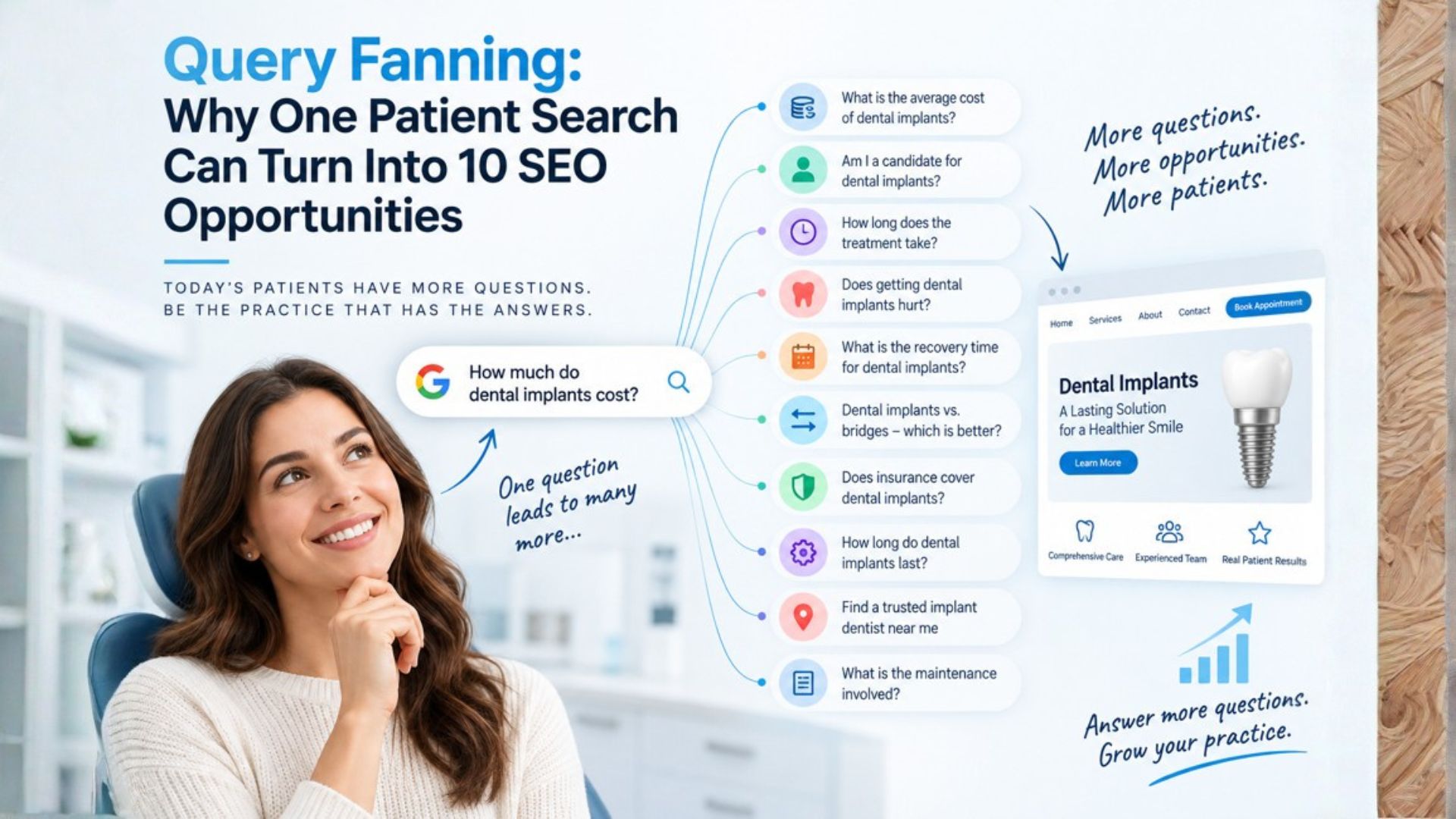
A patient searching for a dentist may start with a simple question:
“How much do dental implants cost?”
But that single question rarely represents everything the patient wants to know.
They may immediately wonder whether they are a candidate, how long treatment takes, whether implants hurt, what recovery involves, whether insurance covers treatment, and whether a bridge or denture would be a better alternative.
This is where query fanning becomes important.
What Is Query Fanning?
Query fanning, also called query fan-out, describes the way Google’s AI Mode can break a complex question into multiple related searches or subtopics.
Google has publicly explained that AI Mode uses query fan-out to break a user’s question into subtopics and issue multiple queries simultaneously. The purpose is to explore the web more deeply and gather information relevant to different parts of the original question.
Instead of treating a search as one keyword, AI search can effectively explore the entire information journey behind that question.
That changes how dental practices should approach content.
Read More: How AI Search Is Changing Dental Marketing
From One Dental Keyword to a Complete Patient Journey
Consider a patient searching:
“Are dental implants worth it for replacing a missing tooth?”
A traditional SEO strategy might focus on ranking a dental implant page for “dental implants.”
A broader content strategy asks what the patient needs to know before making a decision.
That could include:
- What dental implants are
- Who is a suitable candidate
- How much implants typically cost
- How long treatment takes
- What the procedure involves
- Whether bone grafting may be necessary
- How long recovery takes
- How implants compare with bridges and dentures
- How long implants can last
- What maintenance is required
These aren’t random keywords. They are connected questions in the same patient decision.
Your website becomes more useful when it answers them.
Why This Matters for Dental SEO
Google says people are increasingly asking longer, more complex questions in AI search, and early AI Mode users have submitted queries two to three times longer than traditional searches.
That means dental content should be built around topics and patient needs, not just isolated keyword phrases.
This doesn’t mean creating a separate 500-word blog post for every question.
Instead, start with an important treatment page and build depth around it.
For example, your main Dental Implants page could answer the core questions directly and then link to supporting resources covering implant costs, recovery, candidacy, bone grafting, and implant-versus-bridge comparisons.
This creates a connected content ecosystem.
Read More: Technical SEO for AI Search
How to Use Query Fanning in Your Content Strategy
Before creating a page, ask:
“If a patient asks this question, what will they ask next?”
For an emergency dentist, the next questions might involve:
- Is this a dental emergency?
- What should I do until I see a dentist?
- Can a broken tooth be saved?
- How quickly should I be seen?
- What does emergency treatment cost?
For Invisalign:
- Am I a candidate?
- How long does treatment take?
- Does Invisalign hurt?
- How often do I need appointments?
- What happens if I don’t wear the aligners enough?
Those questions can shape your headings, FAQs, supporting pages, internal links, and future content.
Don’t Optimize for AI Instead of Patients
There is an important distinction here.
Google’s current guidance does not recommend a special formula for getting into AI Overviews or AI Mode. Google says the same foundational SEO principles remain relevant: create helpful, original content, make pages accessible to Google, provide a good page experience, and ensure structured data accurately reflects visible content.
So the goal isn’t to “write for AI.”
The goal is to answer patients better.
When your website thoroughly addresses the questions surrounding a treatment, it gives both patients and search systems clearer, more useful information to work with.
The Takeaway
Query fanning changes the question dental marketers should ask when planning content.
Don’t ask only:
“What keyword should this page rank for?”
Ask:
“What does a patient need to know before they feel confident booking this treatment?”
That shift, from basic keyword targeting to addressing comprehensive patient intent, is how a specialized dental marketing company builds stronger service pages, creates better supporting content, and prepares a website for the increasingly conversational nature of Google Search





