
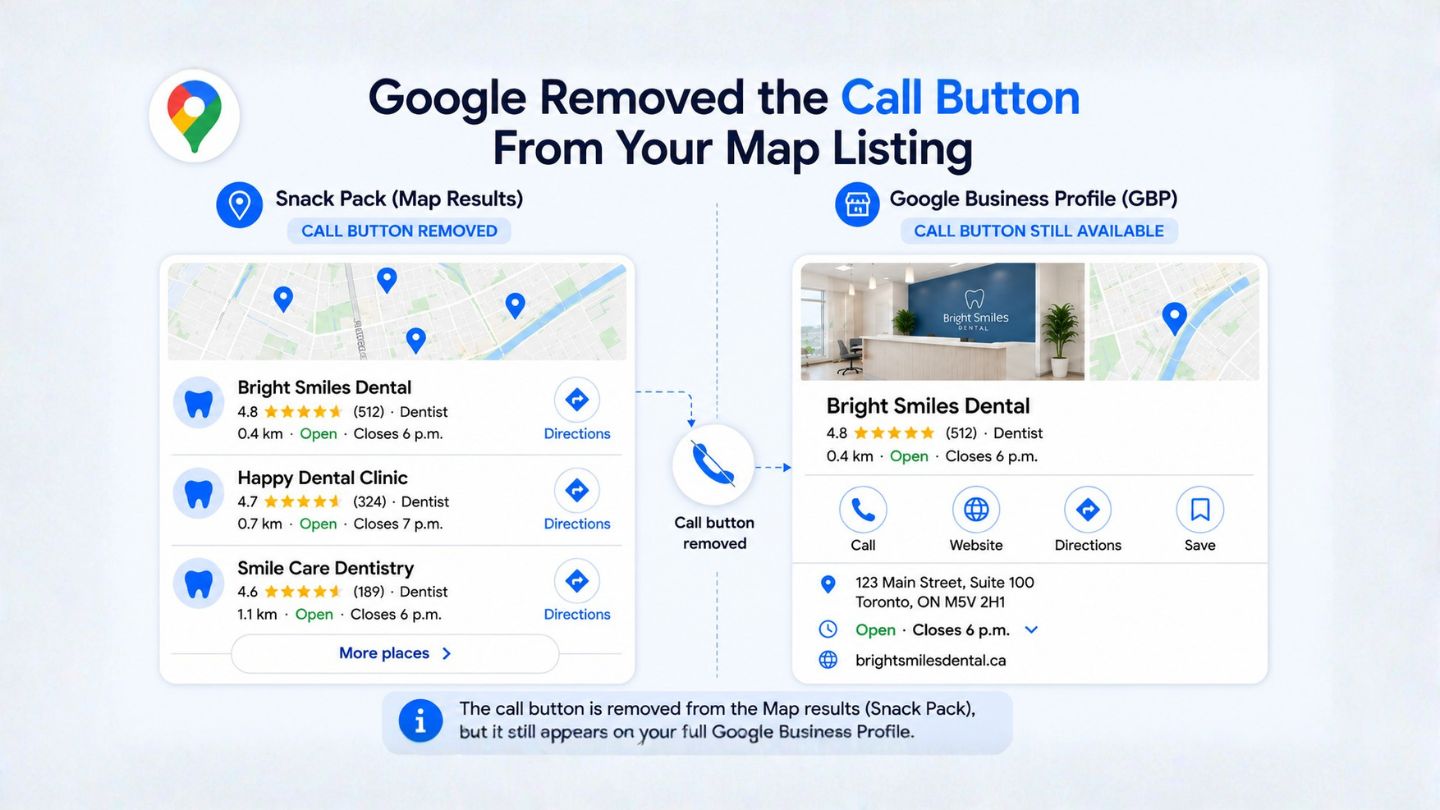
If your front desk has noticed fewer calls coming in lately, even though your practice still shows up in the Google map results, you are not imagining it. Google has been removing the “Call” button from organic Google Business Profile listings on mobile and keeping that prominent one-tap call action on paid placements instead. For a dental practice that depends on the phone ringing, this is a real shift, and it is worth understanding before you assume something is wrong with your listing.
What Actually Changed
For years, the mobile map pack was the prize of local search. When a patient searched “dentist near me” or “emergency dentist,” they saw the top three local practices, each with a bright Call button. One tap connected them straight to your front desk. No website visit, no extra steps, no hunting for a number.
Through late 2025 and into 2026, that button started disappearing from organic listings. The pattern that local search professionals have been reporting is consistent: the call action is showing up less often on free map listings, sometimes replaced by images, while paid placements keep the call button front and center. Some of this has looked like a test in certain markets rather than a clean, universal switch, but the direction is clear. The frictionless one-tap call from a free listing is no longer something you can count on.
The Two-Tier System Google Has Built
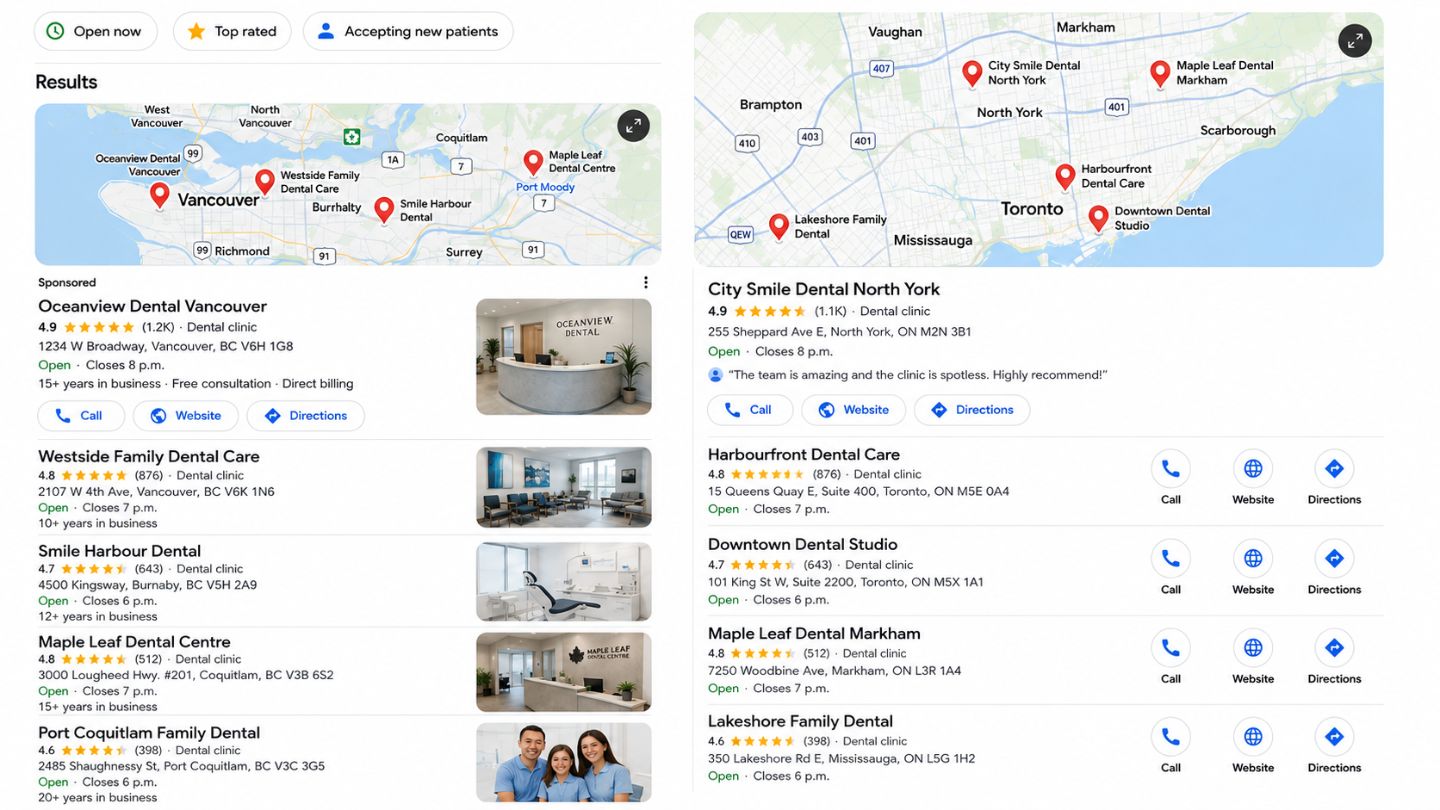
What is emerging is a clear split between free and paid local listings.
Free organic listings now often show images instead of an immediate call button. A patient has to tap into your full profile before they can find your number and call. You can still rank well in the map pack, but the instant phone call that used to come with that ranking is no longer guaranteed.
Paid listings, including Local Services Ads, keep the call button as the primary action, with better placement and immediate tap-to-call. In plain terms, the most valuable action in local search, the phone call, is increasingly attached to listings that businesses pay for.
Why This Hits Dental Practices Hard
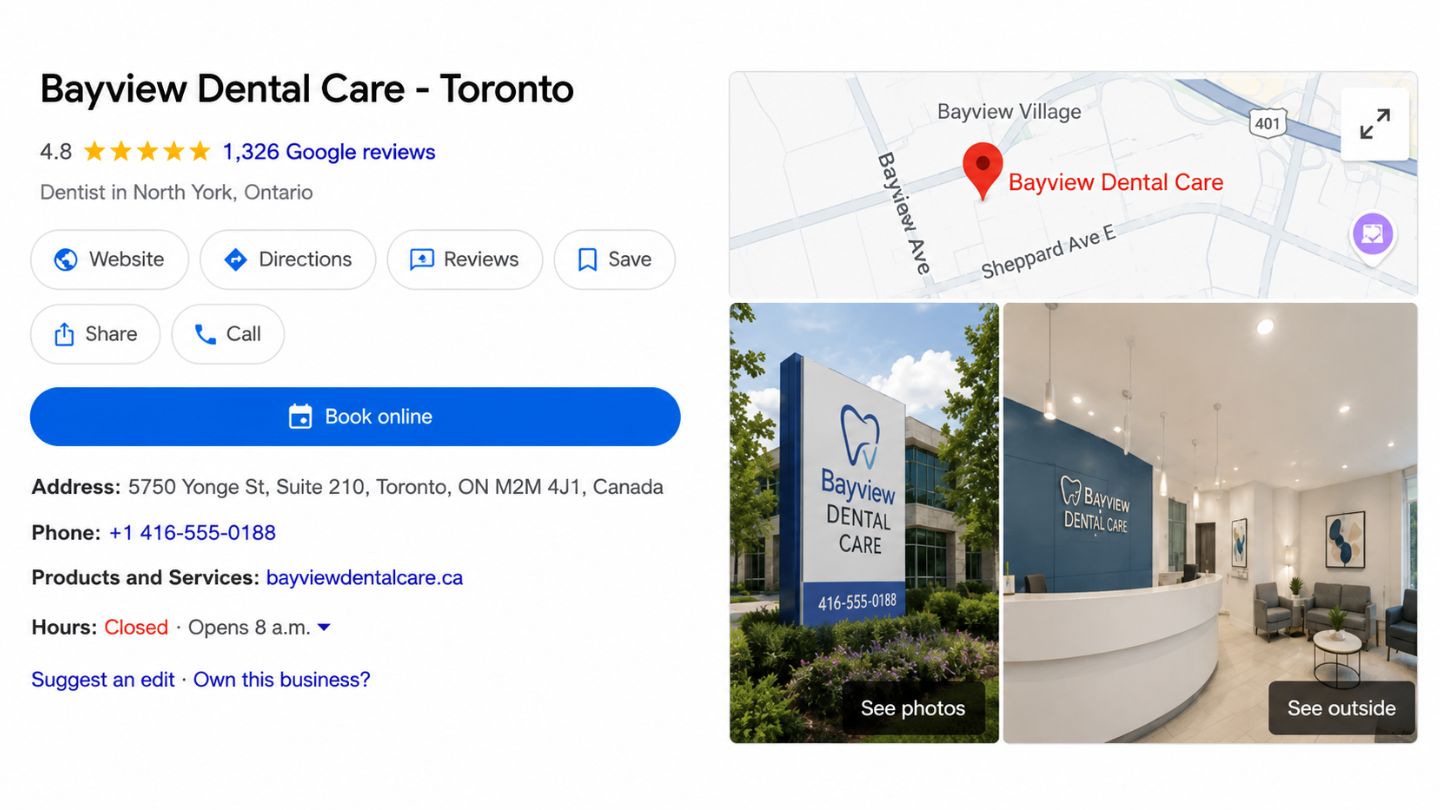
Dental practices live on phone calls. A patient with a cracked tooth, sudden pain, or a lost crown is not in the mood to click through to your profile, scroll past your photos, and dig for a number. They are in a hurry, often uncomfortable, and they want the fastest route to a human being. They will call whichever practice puts the button right in front of them, which is now more often the paid listing.
The practical effects practices are reporting include fewer direct calls despite holding the same rankings, lower conversion from map visibility, and rising pressure to run paid ads just to keep call volume where it was. It is worth being honest here: the specific drop figures circulating in the industry, often quoted in wide ranges, are still partly anecdotal and vary a lot by market and by how well a profile is maintained. The trend is real, but the exact number for your practice is something only your own data can tell you.
What to Do About It
1. Check Your Own Call Data First
Before spending a dollar, pull your Google Business Profile insights for the last twelve months and look at calls, direction requests, and website clicks month by month. If you see calls sliding starting in late 2025 while your rankings held steady, this change is the likely cause rather than anything your team did wrong.
2. Make Your Website Effortless to Call and Book From
The one place you fully control is your own site. Make sure your phone number is visible and tap-to-call on every page, especially on mobile, and that your online booking is fast and obvious. When the easy call disappears from the map listing, the patient who taps into your profile and then your website needs a clear, frictionless path to reach you. A slow or cluttered mobile site loses these patients at exactly the wrong moment.
3. Evaluate Paid Local Placements
Local Services Ads and other paid local placements now hold the prominent call button and sit above organic results. For many practices, this is becoming part of the cost of keeping the phone ringing for high-intent searches like emergency and new-patient queries. Treat it as a calculated investment, not a panic purchase. Run the numbers on your new-patient value and cost per lead before committing to a budget, because every local market is different.
4. Do Not Abandon Organic SEO
Organic listings still matter a great deal. They build trust, they validate your practice when a patient is comparing options, they generate website traffic from people doing research, and they are an asset you own rather than rent from an ad account. The goal is to run both: organic as your foundation, paid as a way to protect call volume on the most urgent searches.
5. Build Direct Brand Demand
Patients who search for your practice by name sidestep the whole paid-versus-organic problem. The more people who already know your name, the less you depend on whatever Google does to its layout next. Invest in genuine local presence: helpful content, video, community involvement, a strong review reputation, patient referral habits, and recall communication that keeps your name familiar. A practice that patients seek out directly is far more resilient to platform changes.
The Bottom Line
This change was not an accident. It fits a long pattern of Google taking actions that were once free and attaching the most valuable ones to paid placements. The phone calls have not vanished. They are being routed toward the listings with the button still attached.
For a dental practice, the response is steady rather than dramatic. Confirm what your own numbers are doing. Make your website effortless to call and book from. Weigh paid local placements as a measured investment. Keep your organic SEO strong. And build enough direct brand demand that a growing share of your new patients come from people who already know your name. Do that, and your schedule stays full regardless of what Google changes next.
Frequently Asked Questions
Did Google really remove the call button from my dental listing?
Google has been removing the one-tap call button from organic map listings on mobile through late 2025 and into 2026, while keeping it on paid placements. It has rolled out unevenly and has looked like a test in some markets, so your experience may vary, but the broad shift is well documented.
Why are my practice calls down even though my rankings are the same?
Because rankings and calls are no longer as tightly linked as they used to be. You can still appear in the map pack while the easy call action that used to come with it is no longer shown, so patients have an extra step before they reach your front desk.
Do I have to start paying for ads now?
Not necessarily, but for high-intent searches like emergency and new-patient queries, paid local placements are becoming a common way to protect call volume. Decide based on your own new-patient value and cost per lead rather than running ads out of fear.
What is the single most important thing I can fix today?
Make your website effortless to call and book from on mobile. When a patient taps into your profile and reaches your site, a visible tap-to-call number and a fast booking path recover the call the map listing no longer hands you directly.
Should I stop investing in organic SEO?
No. Organic listings still build trust, drive research traffic, and remain an asset you own. The strongest approach pairs solid organic SEO with selective paid placements and a focus on direct brand demand.





