
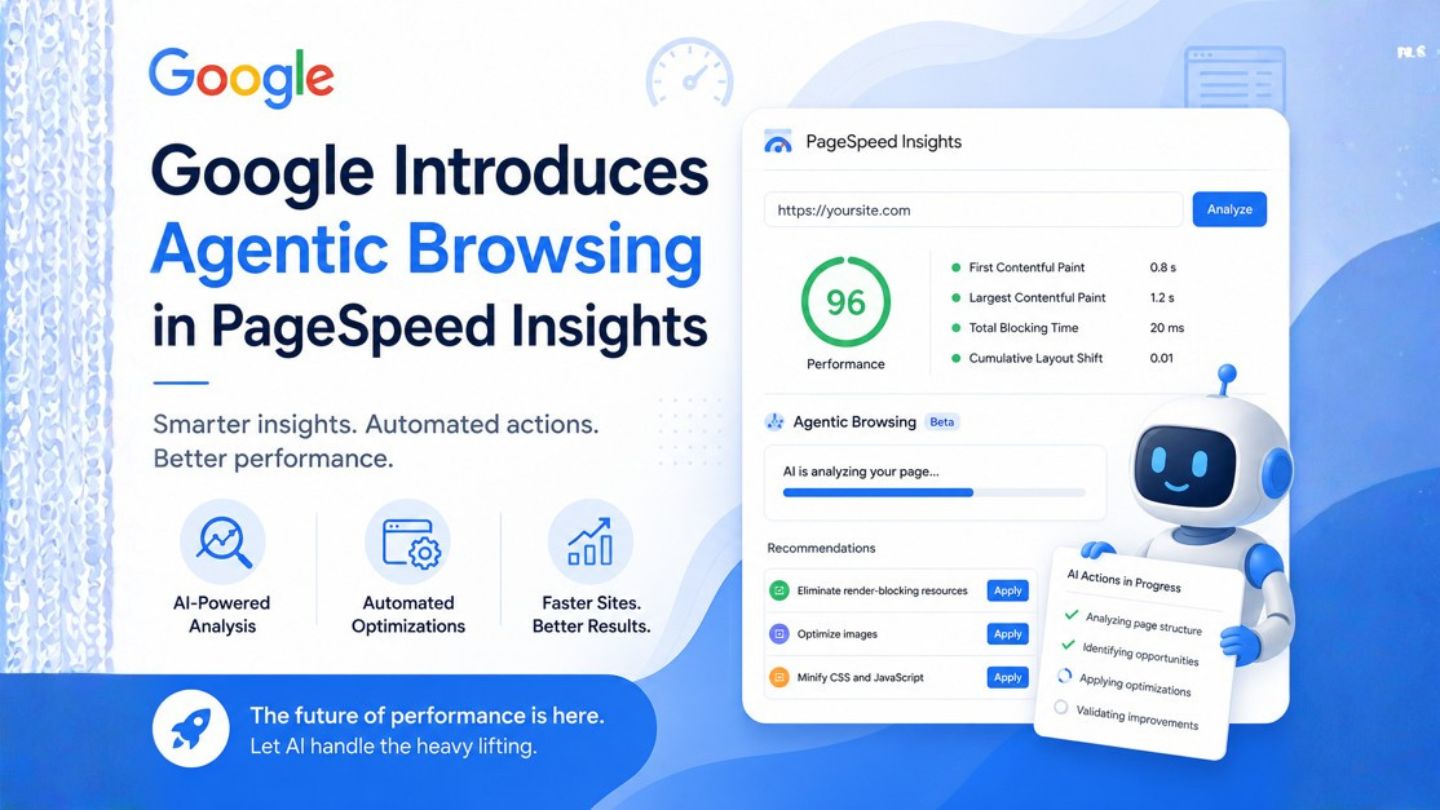
Search is changing rapidly. It’s no longer just people typing keywords into Google AI assistants like ChatGPT, Gemini, Claude, and other intelligent agents are increasingly helping users research businesses, compare services, and even complete online tasks.
Recognizing this shift, Google has introduced a new Agentic Browsing category in Lighthouse 13.3. Unlike traditional SEO or performance audits, this new assessment evaluates how well AI agents can understand, navigate, and interact with your website. While still experimental, it signals the direction Google believes the web is heading.
What Is Agentic Browsing?
Traditional search engines primarily crawl and index web pages. AI agents, however, are designed to go a step further. They can browse websites, gather information, compare options, complete forms, and perform actions on behalf of users.
Google’s new Lighthouse audit measures whether your website is built in a way that allows these AI systems to complete those tasks effectively. Instead of assigning a score out of 100, the audit provides pass/fail signals across several technical checks, helping developers prepare websites for machine interaction.
Why This Matters for Dental Practices
Imagine a potential patient asking an AI assistant:
- “Find the best Invisalign provider near me.”
- “Compare dental implant clinics.”
- “Book a teeth whitening consultation.”
In the future, AI agents may not simply recommend a clinic, they may also visit the website, understand the services offered, compare treatment information, and even assist with appointment bookings.
If your dental website is difficult for AI systems to interpret, you could miss opportunities even if you rank well in traditional search results.
What Does Google Check?
The new Agentic Browsing audit currently focuses on several important website fundamentals, including:
- A well-structured accessibility tree that helps AI understand page elements.
- Stable page layouts without unexpected content shifts.
- Support for emerging standards like txt, which helps AI models understand website content.
- Future compatibility with WebMCP, a protocol being developed for AI-agent interactions.
Although some of these standards are still evolving, they reinforce something SEO professionals have always recommended: build clean, accessible, well-structured websites.
How Dental Websites Can Prepare
The good news is that becoming AI-ready doesn’t require rebuilding your entire website.
Instead, focus on proven best practices:
- Create clear navigation and logical site architecture.
- Publish original, patient-focused content.
- Use descriptive headings and structured HTML.
- Improve accessibility for all users.
- Reduce layout shifts and improve page speed.
- Implement structured data where appropriate.
- Keep technical SEO issues to a minimum.
These improvements not only help AI agents but also benefit traditional SEO, accessibility, and user experience.
The Future of Dental SEO Is AI-Ready
At Dental Marketer, we’ve long believed that successful SEO isn’t just about ranking, it’s about being understood.
As AI-powered search continues to evolve, dental practices need websites that are optimized for both human visitors and intelligent systems. Google’s Agentic Browsing audit is an early indication that search engines are beginning to evaluate websites from this new perspective.
Practices that invest in technical SEO, structured content, accessibility, and user-friendly website experiences today will be better positioned for tomorrow’s AI-driven search landscape.
The future of dental marketing isn’t just about appearing in search results, it’s about ensuring your website is ready when AI becomes your next visitor.





